Platform on civil engineering, underground infrastructure, energy, construction equipment & construction machinery
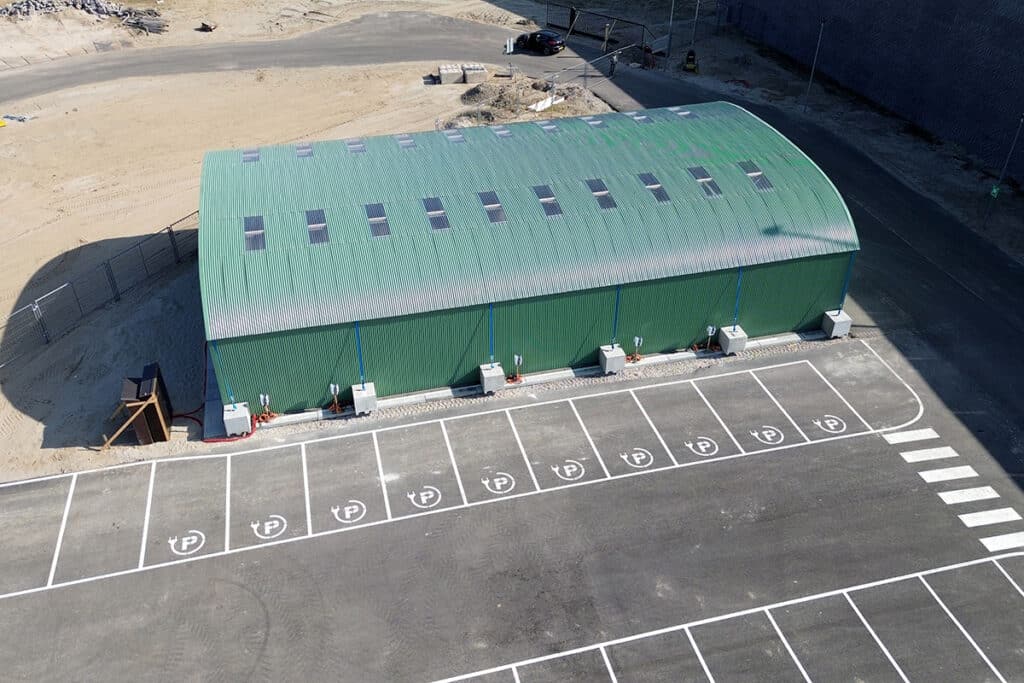
Early anticipation makes all the difference
Low-emission construction does not start on the construction site, but months, sometimes even years before. “With large civil engineering projects, early anticipation is crucial: timely insight into power requirements, water capacity and planning, and above all involving utility companies on time,” says Theo Hartman, owner of Bouwtech BPI BV, which specializes in the construction of large temporary infrastructure in civil engineering works. It was precisely this proactive approach by the Port of Rotterdam Authority that determined the success of the low-emission construction site at the Princess Alexia Viaduct.
Bouwtech BPI has been supplying complete connections for low and medium voltage, water transport and pressure sewers over long distances for many years. “With more than 35 years of experience, including a long history at BAM Infra Nederland, we are familiar with the technical and logistical requirements of large construction projects,” Hartman emphasizes. “Partly because of this demonstrable knowledge, we were approached by BAM in early 2024 to participate in the tender for the Princess Alexia Viaduct, which was entirely devoted to low-emission construction.”
In July 2024, the tender process began. Hartman: “The first question that is then asked is: where do you start if a construction site has to run largely electric? Essential in this is early research into existing infrastructure, distances to networks and the power required. By making early offers to utility companies, which often have lead times of a year to a year and a half, we were able to plan the project tightly. Our experience on the Maasvlakte in previous projects, where infrastructure and planning are strongly linked, proved to be a valuable asset here.”
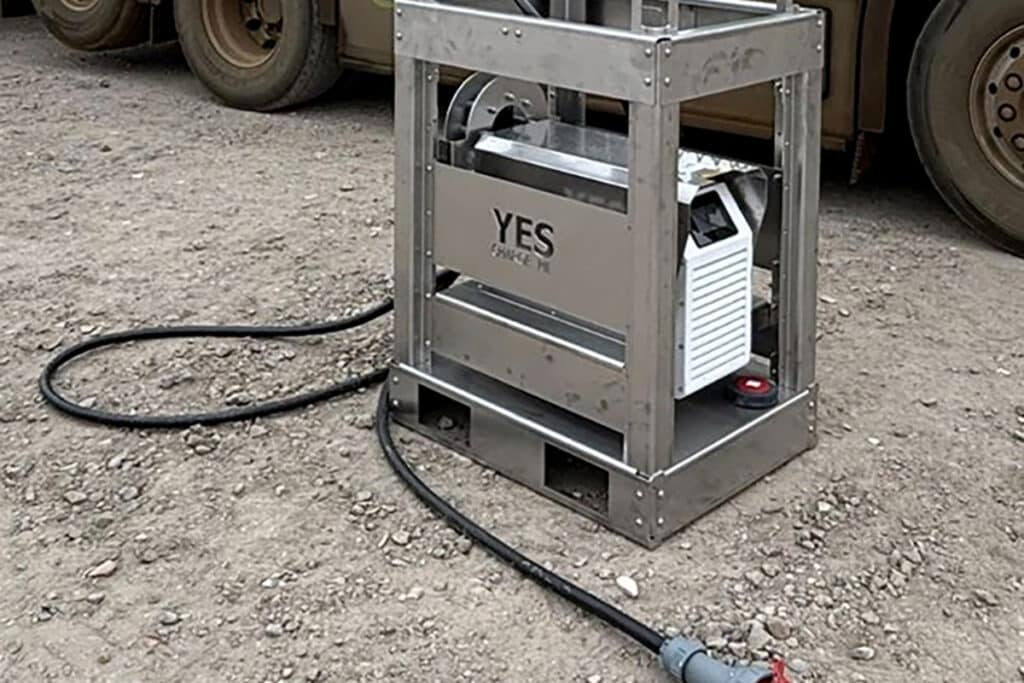
For this project, we were asked to make a calculation based on charging electric equipment and fifteen car charging stations. “On this basis, we made the power calculation: it led to a required connection of 1,000 kVA. The request could go directly to the network company, where there was no grid congestion yet at the location in question,” Hartman explains. “Timely arrangements were also made for process water, 60 m3 per hour of gray water ‘tapped’ from the Port of Rotterdam Authority's pipe line.”
After determining the equipment and power requirements, Bouwtech BPI designed the complete construction site layout. “In doing so, the charging plaza was split into two locations, each with its own transformer station. By making the charging stations pluggable, they can easily be moved to wherever e-material is operating at the time. This proved a major plus in the award phase,” Hartman knows. The total infrastructure includes 1,200 meters of 23 kV medium-voltage cable, 800 meters of low voltage, 400 meters of pressure sewer, a 1,200 meter water pipeline and various charging stations from 11 to 150 kW.
From design and engineering to construction, installation and finally clean up and reuse of materials again, the entire process is taken care of by Bouwtech BPI. “Thanks to timely requests, a well thought-out design and in-depth experience with complex projects on the Maasvlakte, BAM can build low-emission buildings without delay.”