Platform on civil engineering, underground infrastructure, energy, construction equipment & construction machinery

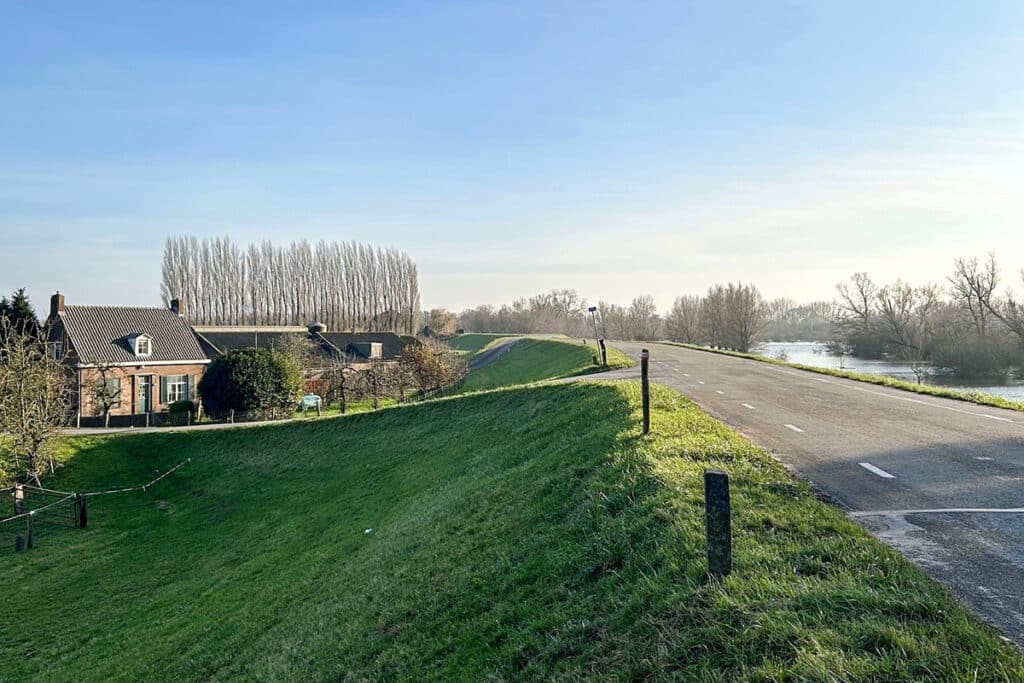
The centuries-old Grebbedijk between Wageningen and Rhenen is on the eve of a complex reinforcement task accompanied by future-oriented area development. Although the dike is relatively short at 5.5 kilometers long, it is very important for ensuring water safety. When the dike breaches, the consequences are enormous and the water can reach as far as Amersfoort. The project has therefore been included with national priority in the High Water Protection Program (HWBP). On Oct. 31, 2025, contractors Boskalis Nederland and Wetering, together with the Vallei and Veluwe Water Board, signed the contract to execute the area development Grebbedijk. Iv is working with the consortium on the integral design.
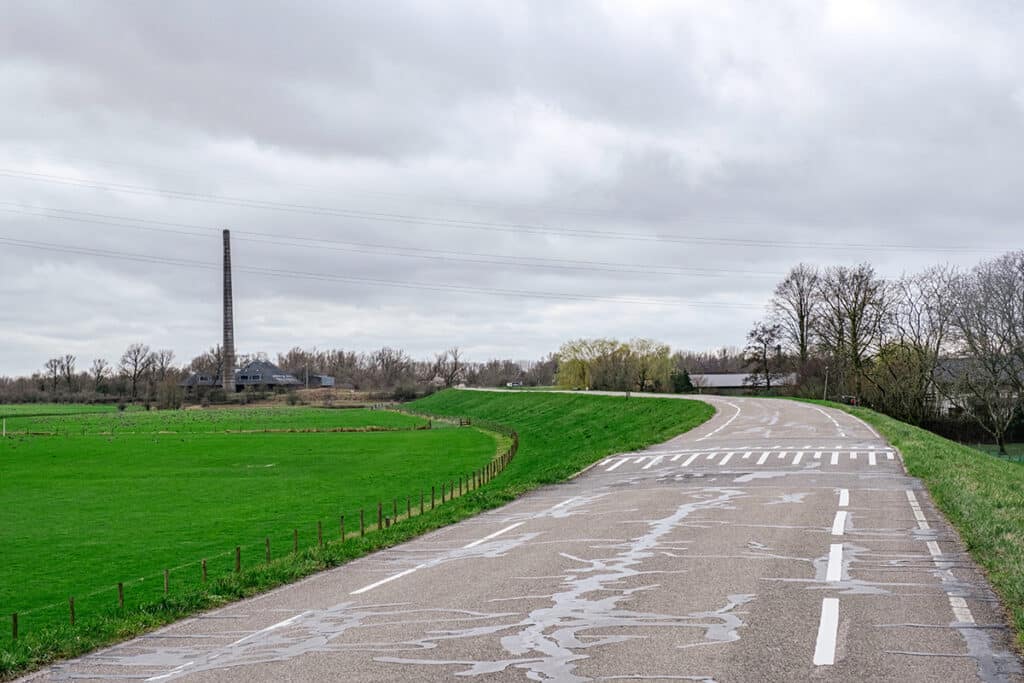
In 2017, new water safety standards were included in the Water Act. These new safety standards look not only at the strength of the dike itself, but also at the potential damage in the event of a dike breach. In 2017, Waterschap Vallei en Veluwe again assessed that the Grebbedijk did not meet the current requirements for water safety. This project will reinforce the dike in a sustainable and future-proof manner so that it once again meets the legal safety standard and can continue to provide protection against high water levels in the Lower Rhine in the future.
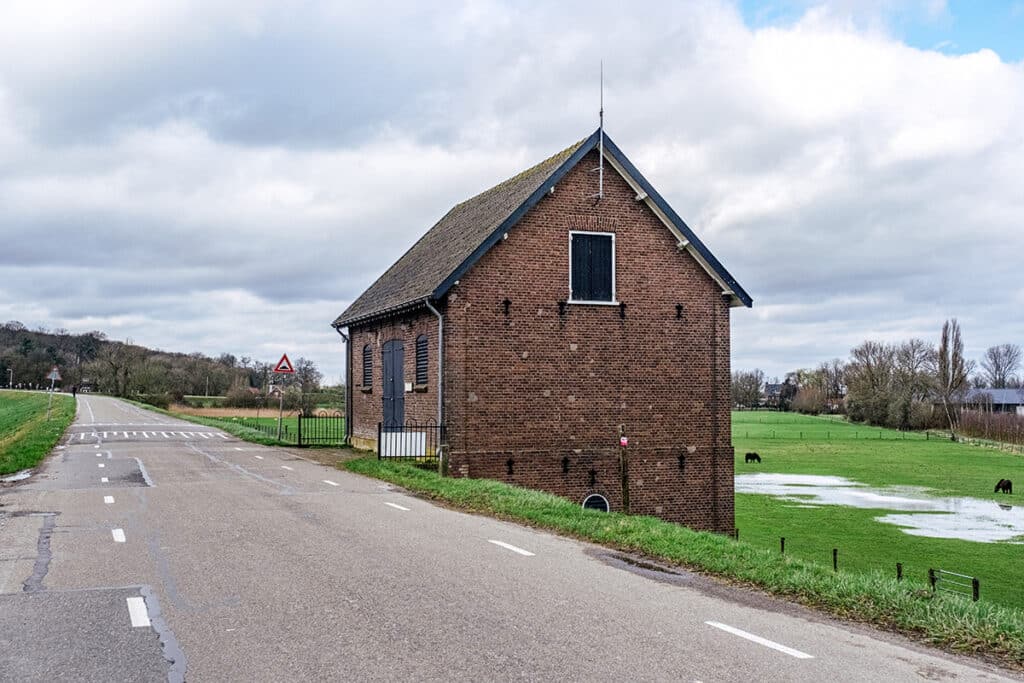
The area development is special and complex in several ways. Water safety and the dike reinforcement task are central, but the opportunity to strengthen the surrounding nature and make the area more attractive for recreation is also being exploited. This includes challenging components such as the demolition of the Witte Sluis (an old drainage sluice), the incorporation of longitudinal structures and embankments near monumental properties such as the Dijkmagazijn, the Rijnschans and the Dijkstoelhuis, and the design of a WFD channel for the Water Framework Directive (WFD) measures. The WFD stipulates that water must be a good habitat for the plants and species that belong there.
When reinforcing the Grebbedijk, space is limited, especially near buildings and monuments. We engineer new longitudinal structures, such as steel sheet pile walls, in which we calculate accurately and can determine the type, length, strength and location. Existing structures in the dike are also thoroughly analyzed to ensure that they meet the safety requirements for 2075.
In the rural area the challenge is to fit the retaining embankment so that it approaches the ambitions within the spatial quality framework as closely as possible. For the failure mechanism piping (the occurrence of sand-mediated seepage), the design team will consider the most appropriate (vertical) solution: a heavescherm, a vertical sand-tight geotextile, a coarse sand barrier or a plastic filter screen.
The starting point in the implementation of this project is to ensure a sustainable dike, with as little environmental impact as possible during construction and maintenance. The dike will be constructed as circularly as possible. Innovations play an important role in this. For example, innovations in the preliminary phase have made it possible to significantly reduce the height of the dike. From a sustainability point of view, as much existing material as possible will be reused in the area, such as soil, sheet piling and grass revetment. A piling test will also be carried out to determine the best execution method in terms of nuisance (vibrations and noise) for the surrounding area. The results of the test will be integrally included in the design, and where necessary other implementation methods will be chosen to minimize nuisance for the surrounding area.
By awarding the execution of this project to the Boskalis and Wetering consortium (Konikswaard combination), the first step in the execution phase has been taken. In the coming period, the integral design and implementation design will be worked out. Outdoor work will start in early 2027. The aim is to deliver the project no later than 2030.