Platform on civil engineering, underground infrastructure, energy, construction equipment & construction machinery
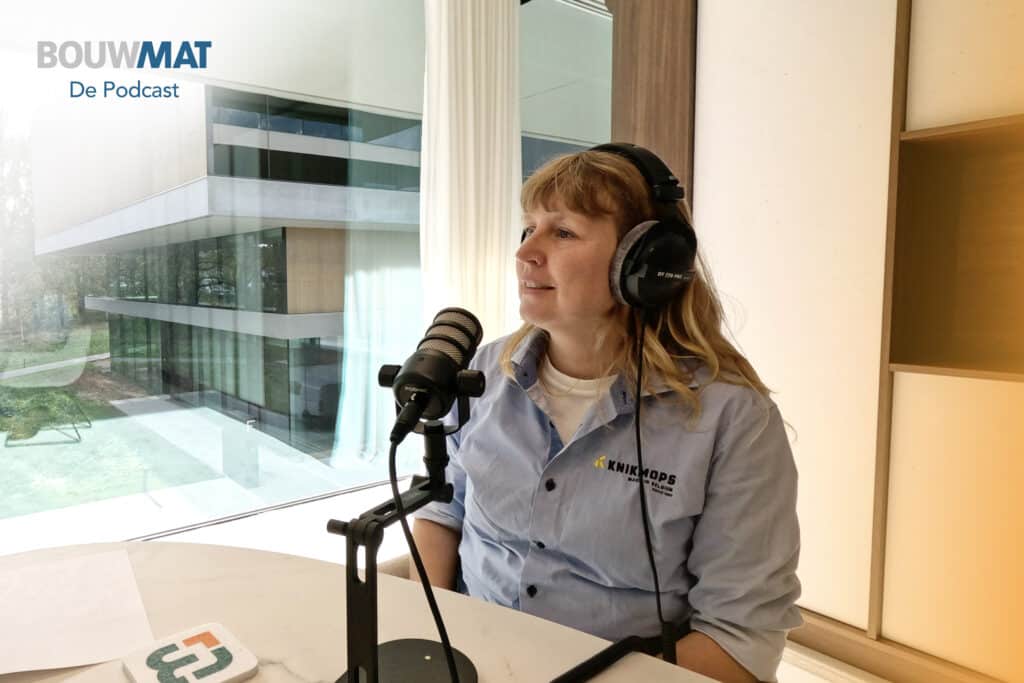
In the very first episode of the BouwMat Podcast, we welcome Marleen Geens of Gebroeders Geens - the Kempen family business behind the Knikmops and Rollmops. For 35 years they have been building their machines entirely ‘Made in Belgium,’ with a production of almost 900 units per year. How do you keep production profitable in your own country? And why do so many customers still choose Belgian quality over foreign alternatives?
A conversation about innovation, entrepreneurship and the strength of local craftsmanship.
[00:01] Welcome to the Construction Matt Podcast. The platform for construction and materials professionals. Today we head to Hoogstraten, where Gebroeders Geens has been proving for 35 years that Belgian mechanical engineering is more than alive and kicking.
[00:19] The machine company, known for the knikmops and the rolmops, produces almost 900 machines a year. And most importantly, completely made in Belgiumë we talk today with marleen geens second generation
[00:35] all meanwhile about innovation family and the power of family and local craftsmanship day marleen welcome to bouwmaat podcast nice to have you with us day chris merci for the invitation that's
[00:49] like done how does it feel after gosh 35 years to see the family business still growing and wanting to grow as well. Yes, that's incredibly nice. The one that
[01:01] also working in a family business will certainly recognize that ambition I think, but anno 2025 also not always a natural thing I think. But we feel that for our products
[01:15] really is a market, both a growth market in the Netherlands and Flanders, but that the growth markets are also really starting to pick up internationally. So we can really put our focus on that as well. So it's going fast for the
[01:37] Geens brothers. For those who don't know you guys well yet, which is pretty unlikely, but still, what exactly do you guys do and how did it ever start in Hoogstraten? We are Gebroeders Geens so from
[01:49] Hoogstraten, from Noorderkimpen and we make two brands, articulated mops and roller mops. They are small articulated loaders or haulers mainly for outdoor work. So pavers, landscapers, earth moving,
[02:08] that's all in our client portfolio. Okay, and you grew from two brothers, so the Geens brothers, to 60 employees.
[02:19] How did that happen? My father and my uncle started the company with the invention of roller mops. In the late 80s it was, now incredible to hear,
[02:32] the big fashions to pave their driveways and parking lots. Pavers are paid per square meter, that's still the case. Those really looked for a way to work more efficiently, without having to hire a lot of staff because of that.
[02:49] With a RoleMops, they had an efficiency gain very quickly. From having to go with three people, in a team of four, apply three people, lay one person, with the RoleMops they could actually go to one person apply and three people lay.
[03:02] So that was a lot more square footage in one day. Because of all kinds of factors, but so with the roller mop for sure. And so we actually kind of launched as a machine builder.
[03:18] And then in 1997 then our portfolio expanded from a roller mop, which we have three different types of, to an articulated mop. That's then a small articulated loader. That one is bigger, can do a little bit more again,
[03:31] can handle different attachments. And that's also, we notice then now the product with which we can really offer a nice solution in a lot of different markets, so not only with the Pavement Engineer. And then, yes that's how then our trajectory has continued to run and then since 2016 lies
[03:48] our focus really very much on machine building and expanding our production really. And we're doing that, yes that's systematically going more and more.
[04:00] And thinking top of mind like that, what do you think has changed the most in those 35 years that you guys have been around? If you have a view on that of course. Anyway, the thing that has changed the most is that we work with a very large team now.
[04:16] So 60 employees. We really grew into a manufacturing company. Before that, we were also a local agricultural blacksmith and did some custom work,
[04:30] sometimes interior, sometimes very particular niche solutions for people, both very small limited and large hydraulic projects. That's all really much less now and now we're really, really the big focus
[04:51] is that production of knikmops and rolmops. With you guys it's mostly made in Belgium and you would almost think that's such an anachronism or at least a little contrarian. You guys really produce everything under one roof.
[05:05] Why is that so important for you to keep it that way? I'm going to add a nuance first. The chassis are made 100% with us. That really means, sheet steel comes
[05:16] the one gate in. We do that laser work, the welding, the bending work, limited also some apprehension work, we paint those and then we build in. But the built-in parts, they come from all over.
[05:30] So I want to add the necessary nuance, but we do, to me it does feel, we are a real manufacturing company. And that's important, I think, to pass on, because that's often the other way around with a lot of companies who also often say that they make products.
[05:49] making in belgium who often do the final assembly only here in belgium whereas with us all that production company is really under one roof okay and what are what are there then when you have
[06:00] definitely thought about that what are then the biggest advantages and finally of producing locally yes the very first and the most important advantage right now is that so we are really also a manufacturing company and can continue to be.
[06:14] In my opinion, I don't have any experience with that, but in my opinion, if you outsource some of your production, your company also becomes a logistics company to some extent. And that's something that I don't find in our DNA, but the manufacturing company is very much.
[06:31] And then the logical things, I think. With your product development department, you work very close to your manufacturing part of your business.
[06:43] So that's really literally open the door and you're in the welding department. That's something you can't replicate if you decide to do a very large part of your production somewhere else. And something in the long run anyway is the know-how. You lose a piece of your know-how.
[07:01] Suppose tomorrow we decide to move our welding department to another country, for example. Yes, the step of then pulling that back into the house seems very difficult. But now, because you can keep running that,
[07:16] you always have that knowledge close at hand. And what are you running into? Because no doubt you are running into. Entrepreneurship in Belgium is a challenge for everyone. What do you run into sometimes? Yes, the obvious things I think. Wage costs are a big thing anyway, so sometimes you can't keep up with the international price war or something.
[07:41] So then you have to make up the difference on other things, which I think we're doing right now. The search for skilled personnel, but then in doing that I do make...
[07:54] For me that's... Finding skilled personnel is a challenge anyway, but along the other side we offer in-house training anyway. People have never made a knikmop before, because that can only be done with us.
[08:07] So unless they have ever worked with us, I have to train everybody anyway. So there's an advantage and a disadvantage in that. Yes, and do you notice that customers consciously choose Belgian makelee?
[08:22] A Made in Belgium label, is that worth something? Yes, it is definitely worth something. Especially for our Belgian customers. They are also incredibly proud of it. On an international level it is sometimes a little less
[08:36] a deciding factor or something. But I know that a lot of people who ride knikmops are also very proud of the fact that they ride a Belgian product. And they are also unique in that. You have a lot of other products not having the option to choose Made in Belgium,
[08:59] whereas with those articulated loaders and those haulers, they do and then you choose articulated mops or roller mops, so they can. But also in the Netherlands they can certainly be found for that. That's less the made in Belgium story then, but the feeling that it's very local and that
[09:16] the manufacturing company is under one roof. They find that as charming as a Kemppenaar. Yes, and that undoubtedly gives influence on quality and longevity probably for your machines as well,
[09:31] that really that in-house production. Yes, anyway. I think the in-house production may have a little bit less of a deciding factor for that, but the willingness of the Geens family to
[09:45] quality to produce. From our first production, Knikmops in 97, there are still machines from that on the road today. Those then come back third, fourth hand to
[09:57] us on maintenance and then we have a museum piece in a moment. That does something to you, if I was six at the time. So that's incredible to see those machines back then. So yeah,
[10:12] a kink mop can really last a lifetime and that's one of the things that you then make a difference with in that people might then still be able to choose a product that then might not match in price with a
[10:26] machine that was made in the Middle East or somewhere else, but which then, which you know of okay that either has a very high resale value or I can just, I buy it there now and I can
[10:39] there, I don't get those worn out on my life or lifetime. It's kind of that total cost of ownership of course always. You celebrated last year, if I'm not mistaken, your 35th anniversary.
[10:59] I should look up sometime which anniversary that is exactly. That was under the theme of innovation and growth. You guys are a family business. You would almost think, like tradition and like habits. But with you guys, that's innovation and growth. What specifically does that mean for you guys, that innovation?
[11:18] Yes, so as an entrepreneur and as a family business owner, I think you do have to always dare to stay in that growth mindset. And then in a family business you have the great advantage that for 35 years those are the same people,
[11:33] so they know the product inside and out. That's really... The knowledge that's with my father and my uncle is incredible it's treasure trove of knowledge so that's a something that that we as a second generation can draw tremendous things from but
[11:48] they are currently still improving their products and that goes very broad with us I have therefore chosen the theme of 35 years of innovation and growth because that is not only about
[12:00] about renewing knikmops or renewing rolmops but that's also really about renewing knikmops or renewing rolmops, but that's also really about renewing in our production. Making sure that that runs efficiently, daring to choose new,
[12:12] sometimes exciting production devices, I will say. Daring to make production more efficient, that is also innovation.
[12:25] That runs like a thread through the construction of our company. So are we talking about automation or robotization even? Robotization to an extent, yes.
[12:39] We have four welding robots. Welding with us is a combination of manual and automatic work. From the moment there's a brainpan involved, so there's some thinking involved, people do that with us. but from when it's actually yes serial long and lots of work that we do on the on the welding robot but we also have two laser cutters an automatic
[13:04] plate warehouse and so things like that really to get that efficiency in there and actually with the team that you have there you can still scale up production without them necessarily having to do yes insignificant hours.
[13:20] And also the tasks that you feel are those tasks that are not fine, very small grinding or things like that,
[13:33] to also make that more efficient and take that out of your hands a little bit. And notice you speak of innovation, it's long since ceased to be innovation of course, making machines electric. Do you have that demand from the market as well, that they want your machines to be much more electric
[13:53] are than before? Yes, anyway. The Netherlands is our biggest market, so half of our production goes to the Netherlands, so you can hear me coming. The demand comes from the Netherlands. So there, for much longer than here in Belgium, the custom has been to ask if something can be electric.
[14:13] And so that has been the motivation for us to start it. The Dutch market then is an incredibly rewarding market to work for. Because one Dutchman will tell it like it is. So if it's not on, you're going to know it very quickly.
[14:27] And those are also news-minded. So they dare to go for that step, in my opinion, before often many Belgians dare to go for that step. And if they don't like it, they get rid of it and they buy something else. Whereas
[14:43] in Belgium it's much more, oy, first the teething problems have to be out. So it would take much longer if the Belgian market was our track market. But because we work in the Netherlands, it goes a little bit faster. That's a combination of government support there, of course,
[15:05] although we also have that here in Belgium, but in the Netherlands it goes a little further. And then that newsiness of the Dutch who are much less cold-hearted about it,
[15:23] or seem to have, I'll put it this way. You would almost think, a family business with 60 employees, that hasn't been a family business for a long time. How do you make sure that that is preserved, that feeling so? One for all, all for one. I think one of the
[15:38] most important things is making sure you know everybody by name. I can still do that with 60 employees, so I also do the hiring myself. The first face they see is a family face, I will say. And then it's
[15:55] a matter of trying to keep a good contact. And those family values, they do come through in our company. A certain flexibility they can get with us.
[16:08] A nice work-life balance they can really count on with us. So that's a, I guess, it's hard to say that about yourself, but a reason for how we actually carry those family values in our company.
[16:28] Okay, Marleen, you're second generation, so you grew up in it quasi. So where do you think Genes Brothers will be in five to 10 years? Yes, so we are in the midst of expanding our production.
[16:40] At the end of the year we will start building a new production hall. I've been saying that for many years, but now it's really happening. It is not much further, because we are very attached
[16:55] to High Street and our umbilical cord doesn't extend beyond Heenworm Street. So we're really at 200 meters beyond that we're going to expand. Then we're going to put away our assembly, then we're going to put away a powder coating plant, and then we're going to scale up, which also gives us the focus
[17:12] internationalization. We're also taking a lot of steps for that right now with professionalization of communications and things like that and then hopefully we're going to be able to use that
[17:24] where we actually tap into other markets. Many plans. Now I may be asking the last question that maybe your father or your uncle could answer better.
[17:35] But if you could start over tomorrow? Would you choose Made in Belgium again? That's a good question. I've only been in business myself for about five or six years. But it's very much in the DNA of who we are as people.
[17:52] I will say it, we are very much intertwined with high streets. I think I live the farthest from the company, which is three kilometers. For the rest, with the six people in our family who work in the company, we all live closer.
[18:09] So that's all cycling distance. So I find it very hard to imagine that we would be a company with plants abroad, or at least production plants abroad. Because that would also mean that you would have to live with that for a year or more.
[18:28] I don't see any of us doing it. We're too happy to be here for that. And yes, that's why our product is but follow. That's a beautiful, heartwarming and truly Flemish response to conclude this podcast.
[18:43] Marleen, thank you very much for this conversation. And congratulations again on 35 years of innovation and growth and especially success with your new step anyway again, when you will move 200 meters soon.
[18:58] This was Bouwman Podcast with Marleen Geens of Gebroeders Geens and more stories on innovation in the construction and equipment sector can be found, of course, bouwman.be and in Bouwman magazine.