Platform on civil engineering, underground infrastructure, energy, construction equipment & construction machinery
Construction has been part of the Voets family business for generations, but with the rise of sustainable building materials, a new idea emerged ten years ago: filling gabions with BioBlocks, made from natural waste streams from the Netherlands' largest lowland peat bog, Weerribben-Wieden National Park. One of the initiators, Teun Voets, gives us a glimpse behind the scenes and shares his ambitious plans for the future.
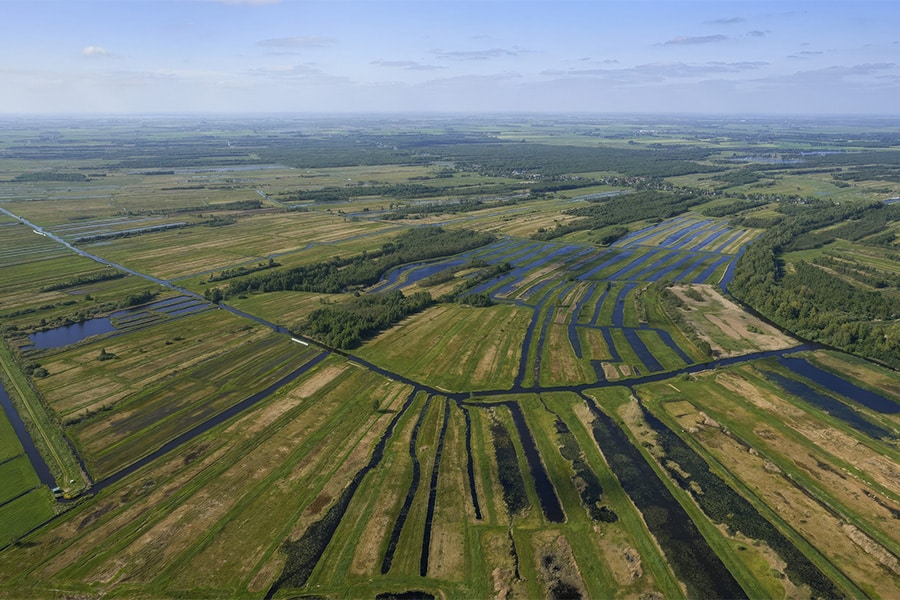
The Voets family builds reinforced soil structures and natural stone pavements in construction projects throughout the country. United by friendship and craftsmanship, both families joined forces to develop high-quality gabion finishes. “Gabions are traditionally filled with quarry stone, usually sourced from quarries outside the Netherlands,” says Voets. “Architects and clients were increasingly asking whether this filling could be made ‘greener’.” Their search led them to a unique area: Weerribben-Wieden National Park, the largest lowland moor in northwestern Europe. Peat was extracted here for centuries, creating a characteristic landscape of weirs, ridges, and pits, with long, narrow strips of water that now form a unique ecosystem of reed marshes, kraggen, open water, and quaking bogs.”
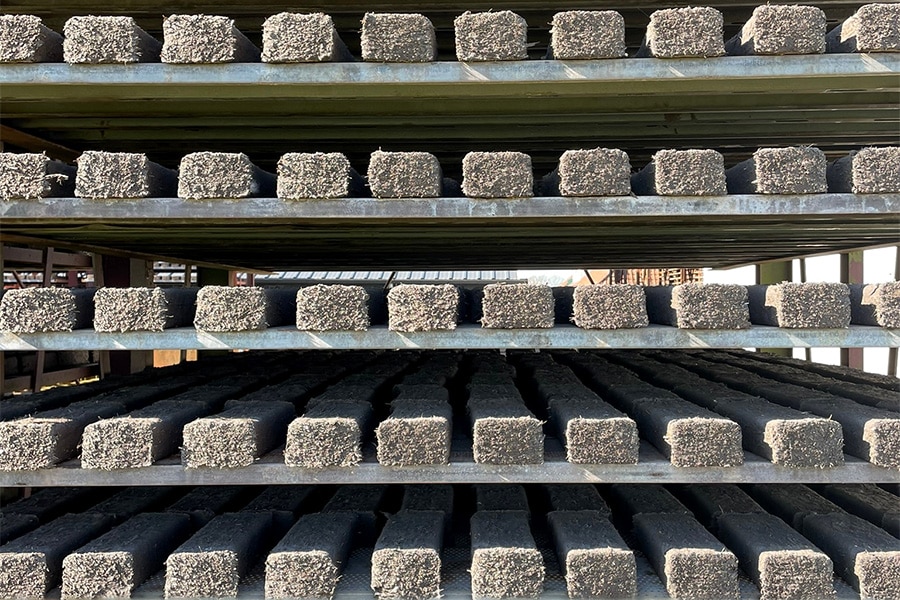
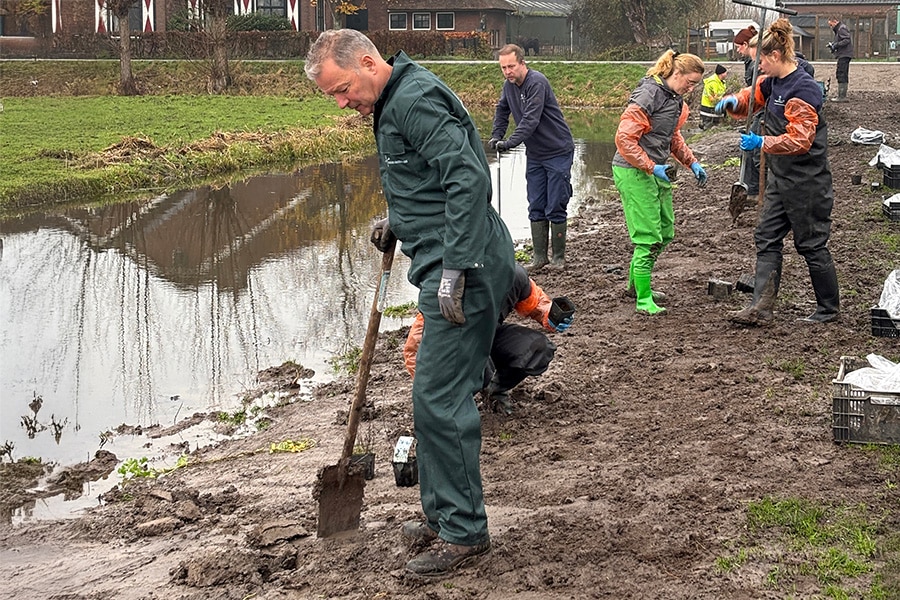
The landscape of Weerribben-Wieden National Park is unique. Without management and maintenance, the area will slowly become overgrown and eventually silt up. “That is why it is necessary to maintain an ecological balance between open water, reed beds, and marshes. To preserve the rare flora and fauna, old peat pits and waterways are dredged. These contain enormous amounts of stored carbon, many times more than in an average forest. If this material is spread above ground, it oxidizes in the air and releases CO2. The question arose: can we turn this peaty residual material into a new building block and at the same time limit these CO2 emissions? This is how the basis for BioBlocks was created.” The first trials yielded 50,000 blocks, made entirely by hand. These were used in gabions at the abutment of a bridge along the Gouwe Aqueduct near Gouda. “Ten years later, they are still growing beautifully. Proof that the concept works and needs to be developed further,” acknowledges Voets.
Production of BioBlocks has now been moved to a former farm in the middle of Weerribben-Wieden National Park. “The former cowshed now serves as a production area, while the potato sheds are used for storage and prefabrication of the baskets. Everything is done locally as much as possible to limit transport.” According to Voets, the composition of the blocks has improved significantly over the years. “By mixing reed fibers, sourced from maintenance work in the area and from reed cutters in the region, with the residual material, the blocks gain more structure and strength. After pressing, the blocks are dried in the open air for two months. Their weight then decreases from three kilograms to one and a half kilograms. During this drying process, the blocks become so robust that they can be used in construction.”
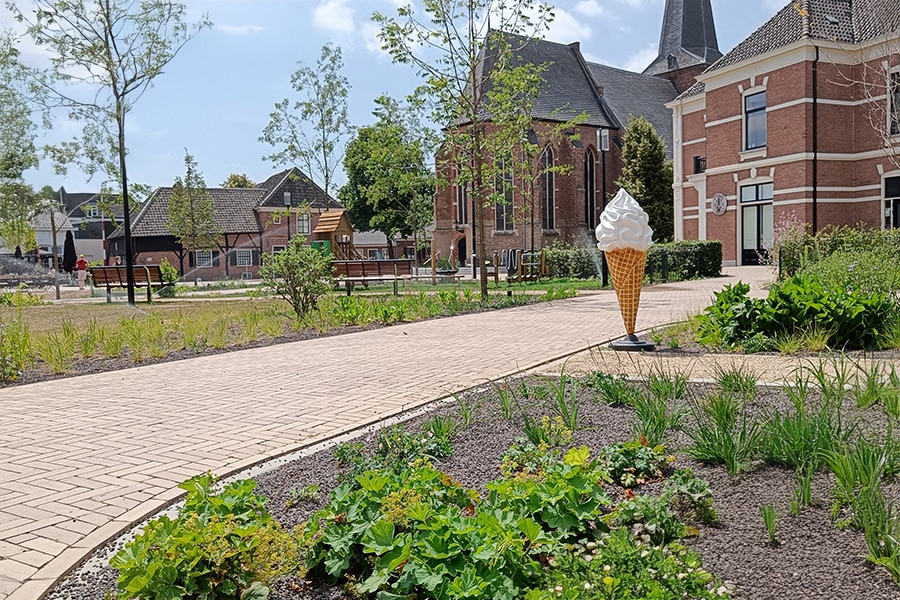
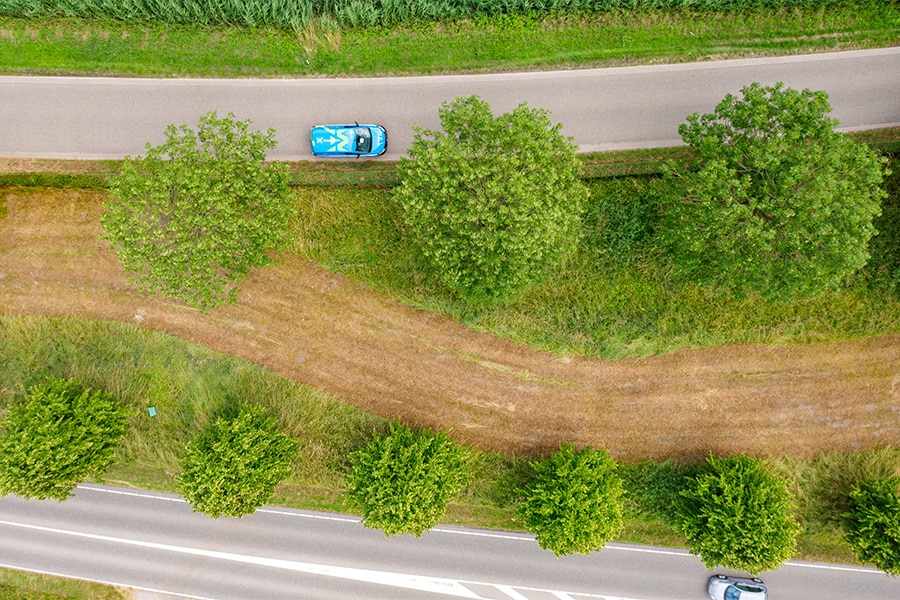
In recent years, BioBlocks have received a significant boost. “Introducing a new sustainable building material takes time,” Voets knows from experience. “We have now completed many projects and are on the verge of new large-scale projects. For the N211 Wippolderlaan, we are supplying and installing 2 x 1 meter cassettes filled with almost 300,000 BioBlocks, as facing for noise barriers and reinforced ground structures.” But the ambitions go much further, such as the development of fully biobased elements, constructed from sustainable materials sourced in the Netherlands, which are not only suitable for gabions, but can also be used for any desired wall finish. “In short, we see great opportunities for the application of BioBlocks and are only at the beginning of a new era of building with natural waste streams,” concludes an ambitious Voets. To be continued, no doubt!
Neem dan rechtstreeks contact op met BioBlocks.
 Contact opnemen
Sustainable construction Why choose Bioblocks? – From plant residues to sustainable building blocks: 100% sustainable, recyclable, and a natural product– Stylish, purely Dutch product with a rural look– Through processing into BioBlocks, the base material is converted from a natural waste product into a sustainably produced raw material– BioBlocks contributes to the preservation of […]
Bekijk Bedrijfsprofiel