Platform on civil engineering, underground infrastructure, energy, construction equipment & construction machinery
GPS-controlled asphalt milling and cementitious foundation construction
In road construction, there is a growing need for circular and technically sophisticated solutions. A good example of this is the use of cement-bound asphalt granulate (Agrac) as a sustainable alternative for traditional foundation structures. Boskalis is making eager use of it in the widening of the A2 motorway between the Het Vonderen and Kerensheide interchanges. On the project, ADUCO is realizing no less than 385,000 m2 of foundations based on asphalt granulate while also making great strides in the field of asphalt milling.
Even in the tender phase, good alternatives to the standard foundation construction were actively sought, says Otto Salomons, director of ADUCO. “One of the promising solutions turned out to be a cement-based foundation based on asphalt granulate. In close coordination between Boskalis and the tender team, this alternative was worked out and eventually adopted. The beauty of a cement-bound foundation is that asphalt granulate that is released on site is reused for the new foundation. Work with work, in other words, without transporting materials. This results in a substantial reduction of transport movements and a considerable environmental gain.”
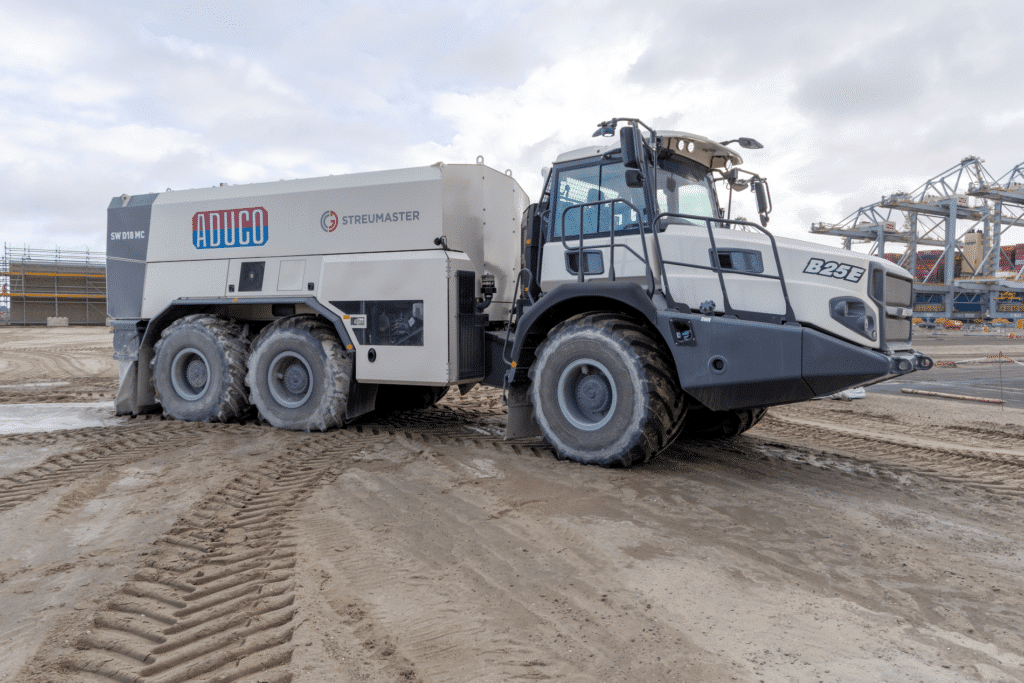
The basis of the Agrac foundation construction consists of a sub-base course on which we apply 25 centimeters of asphalt granulate, Salomons explains. “That construction functions as a construction road or transport route during the project. An additional advantage of this foundation method. About ten days before asphalting, we apply cement to the asphalt granulate at a dosage of 2 percent. We dig that through with a stabilization tiller to create a sophisticated foundation structure. With regular road construction equipment, the top layer is profiled and asphalt can be turned on it ten days later.”
Because of its cementitious structure, Agrac has a bearing capacity at least five times that of a traditional unbound rubble foundation, according to Salomons. “This means less rutting, longer foundation life and maintenance that focuses mainly on the top layers. We also use blast-furnace cement with only a small proportion of Portland cement, making Agrac a relatively environmentally friendly cement-bound solution. Especially in a market with a large surplus of asphalt granulate and high landfill costs, this is a future-proof construction material.”
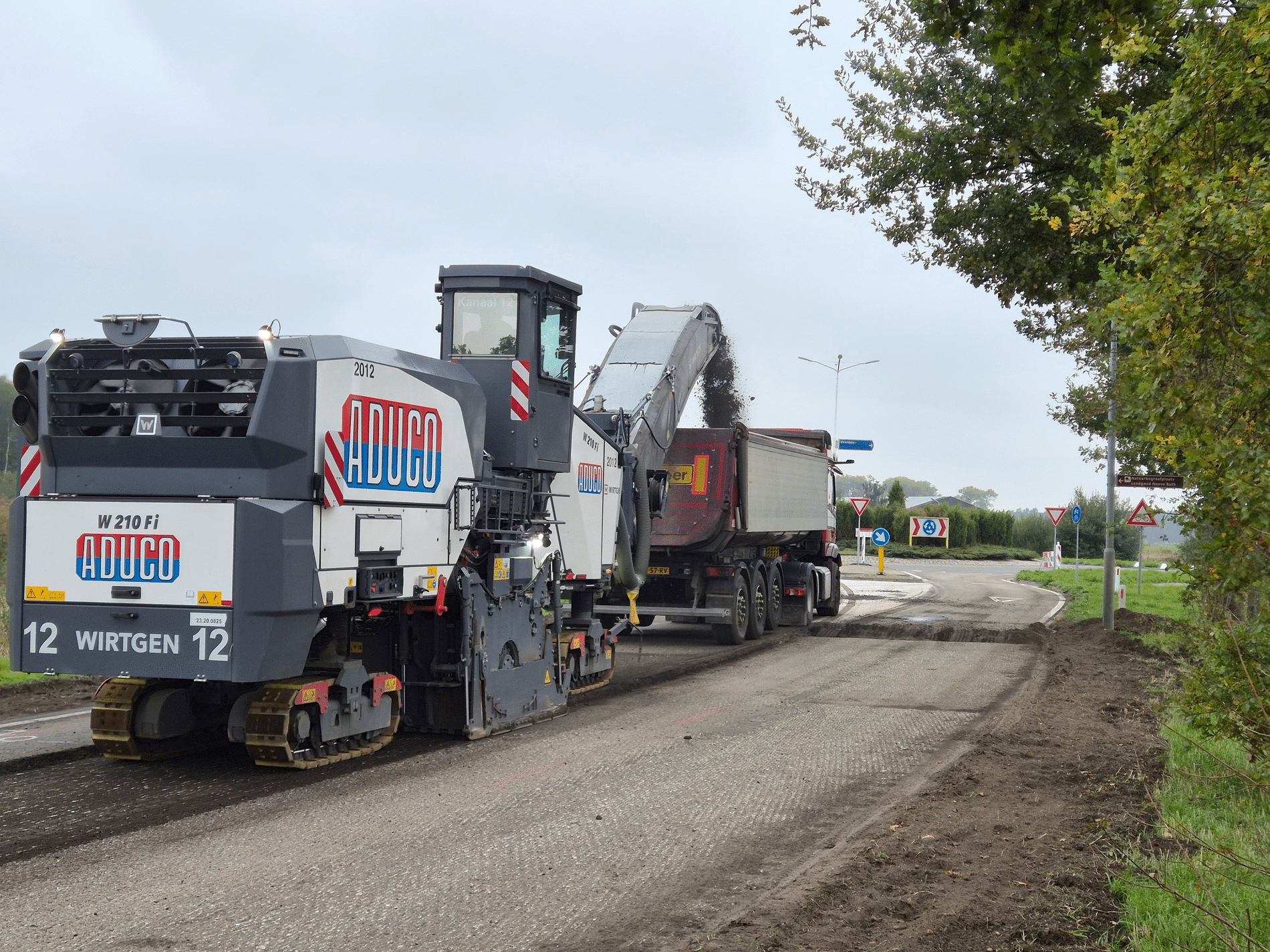
ADUCO is also making great strides in asphalt milling, and has already proven this in the various weekend closures on this project in Limburg. “We use GPS-controlled equipment, so that the profile is milled exactly according to design, without having to make markings on the road. Another unique feature is the use of diamond chisels. These ensure more consistent quality and a much flatter end result and reduce downtime due to chisel changes. It improves ergonomics for our operators, who are also sheltered in a comfortable cab with heating and air conditioning.” With this development, ADUCO shows that sustainability, quality and attractive employment go hand in hand.