Platform on civil engineering, underground infrastructure, energy, construction equipment & construction machinery
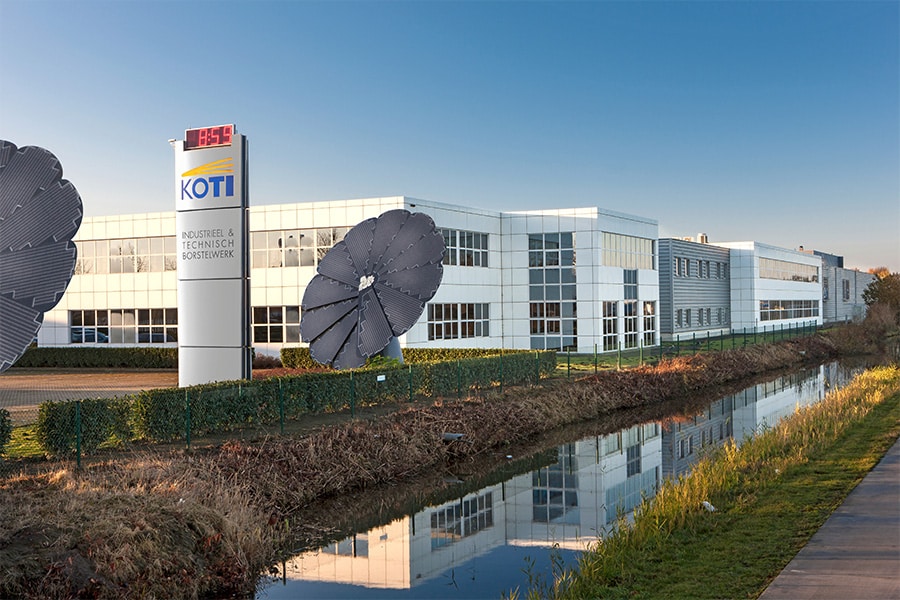
For the Dutch infrastructure and civil engineering sector, brushes may not be visible key players, but they certainly determine the quality of numerous processes. From large-scale street sweeping and project follow-up to airport maintenance and winter deployment. KOTI, which has specialized in industrial brush technology for decades, sees that more and more infrastructure parties are looking more critically at both performance and sustainability. According to the Weert-based manufacturer, this shift is logical, as sweeping in the GWW sector is being increasingly considered as part of quality assurance and environmentally responsible work.
A sales manager explains that the Netherlands has been considered the birthplace of high-quality sweeper brushes since the early cooperation between the brush manufacturer and sweeper manufacturer RAVO. “The knowledge built up then is still deep within the company,” he says. He emphasizes that KOTI develops all brushes itself and produces them locally, which in the international market is the exception rather than the rule. “That local character makes it possible to create solutions that match the heavy loads of road renewal projects, airports, tunnel cleaning and the intensive use of sweepers in inner-city infrastructure.”
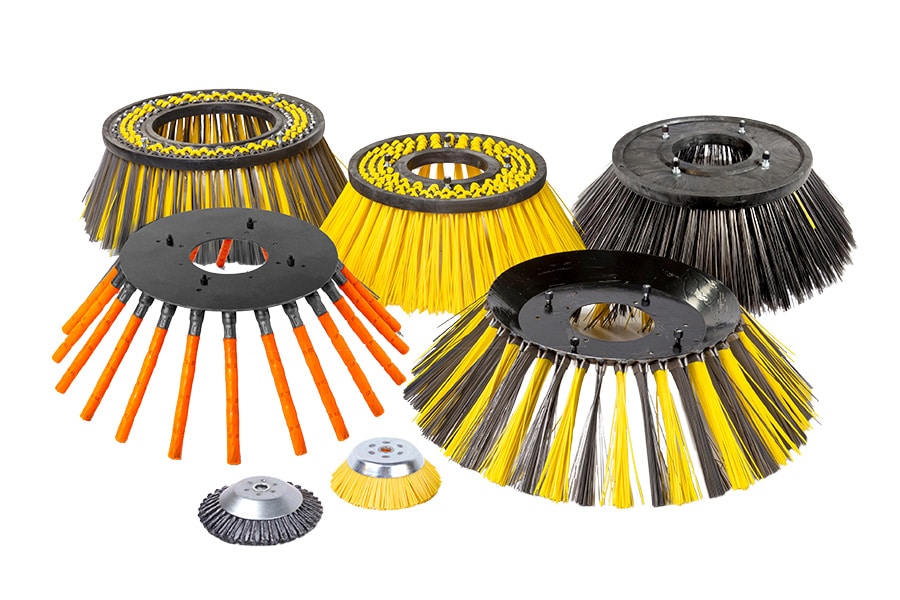
For the GWW sector, sustainability is now more than just an abstract policy goal. In tenders, environmental performance is increasingly being included as a requirement in its own right. The brush manufacturer has noticed that the market is looking for a foothold and that ISO 14001 has begun to play an important role in this. KOTI obtained ISO 14001 certification last fall and the company is therefore demonstrably working according to a broad environmental management system that includes raw materials, production, transport and recycling. The spokesman notes that not everyone in the infrastructure sector is yet aware of the scope of ISO 14001, because it is often mainly the CO2 Performance Ladder that is mentioned. According to him, ISO 14001 is valuable precisely because it includes the entire organization, not just an emissions sub-area.
The spokesman also points out the importance of well-trained operators. A machine operator who applies too much pressure halves the lifespan and increases wear on the surface or machine. The manufacturer therefore provides on-site toolbox sessions, supporting operators on how to brush as economically as possible.
Looking at sustainability and circularity also means that KOTI takes a critical look at the origin of steel and plastics for brush cores, that the company invests in energy-efficient production lines and that its own trucks run on HVO100 to reduce transport emissions. Worn-out brushes are collected separately so that steel and plastics flow back into new raw materials. The company calls this essential for infrastructure projects in which circularity is increasingly being requested by clients.
Moreover, the market is experiencing new movements. Not only cleaning companies and large brands of sweepers are determining the playing field, but also infrastructure and green space companies themselves are increasingly including sweepers in their equipment fleet. In major maintenance of urban infrastructure, for example, sweeping is structurally used to work with low emissions and to monitor the quality of foundations and paving. For airports, where the market leader for indrustrial brushes is also active, it is a matter of efficiently removing rubber residue on runways and keeping runways and taxiways safe.
The message KOTI wants to convey toward infra is that performance and sustainability are not separate. “Sustainability is no longer an afterthought. It is part of professional work. And we want to show how this is reflected in something as seemingly simple as a brush.”
KOTI announces that it will present a new product innovation at the Infra Relatiedagen on February 10, 11 and 12, 2026, aimed specifically at the needs of the GWW sector. The company can be found at booth number 602.