Platform on civil engineering, underground infrastructure, energy, construction equipment & construction machinery
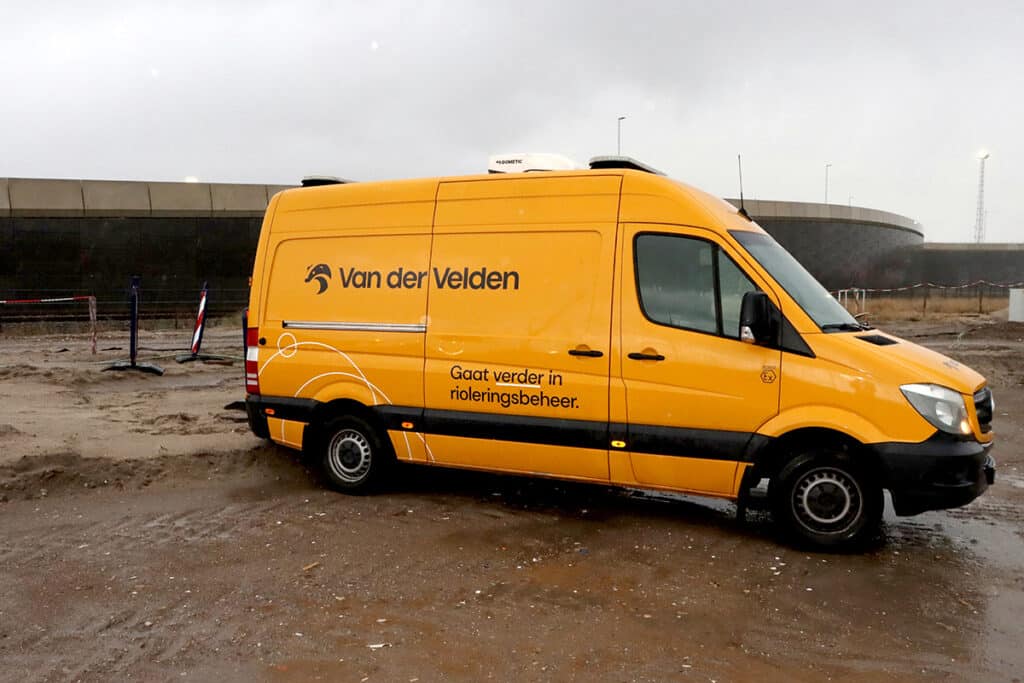
The construction of the Princess Alexia Viaduct with connecting road infrastructure also requires a high-quality stormwater drainage system. The system must discharge rainwater in a controlled manner and infiltrate into the subsoil so that the structure and the surrounding infrastructure function sustainably and future-proof. The Port of Rotterdam Authority wants assurance that all parts are technically in order before the system is finally handed over. Van der Velden's inspections are an essential part of the legally required quality control.
For now, the new system consists of concrete and PVC pipes, in diameters ranging from 200 to 600 millimeters. “Possibly even larger sizes will be used in later phases,” says Leon van Klei, visual inspector at Van der Velden, a company that has specialized in sewer management for 60 years. “The choice of material was carefully calculated in advance by an expert firm, taking into account the loads, ground pressure and resistance of the material. For example, concrete offers a higher flow resistance than PVC, which prevents rainwater from draining too quickly into wadis or outfalls. This keeps water controlled in the system and prevents unwanted flushing.”
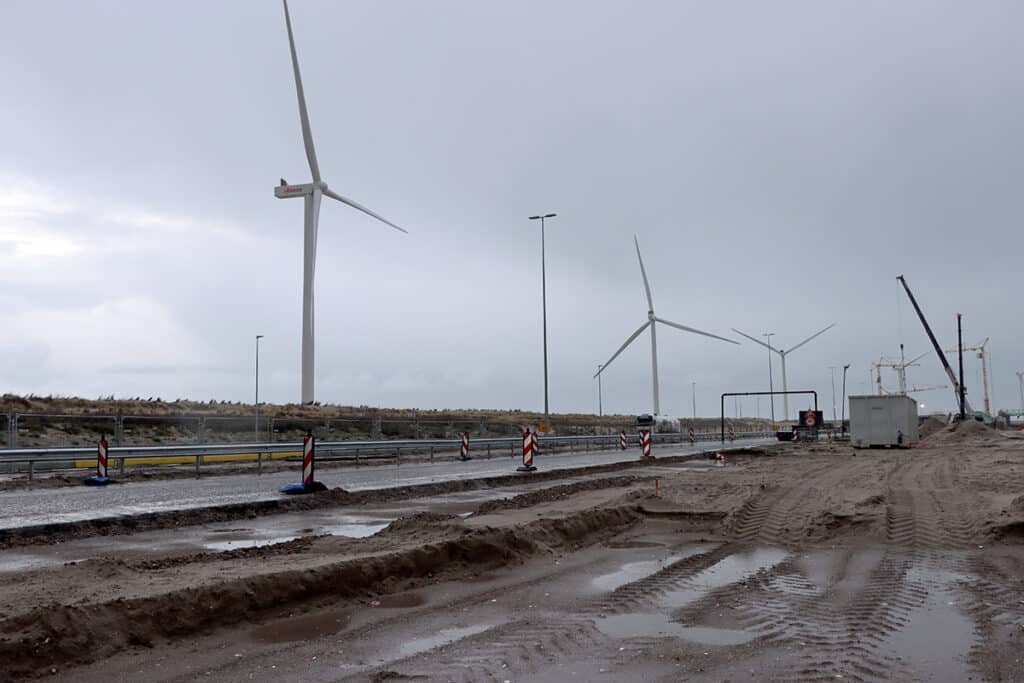
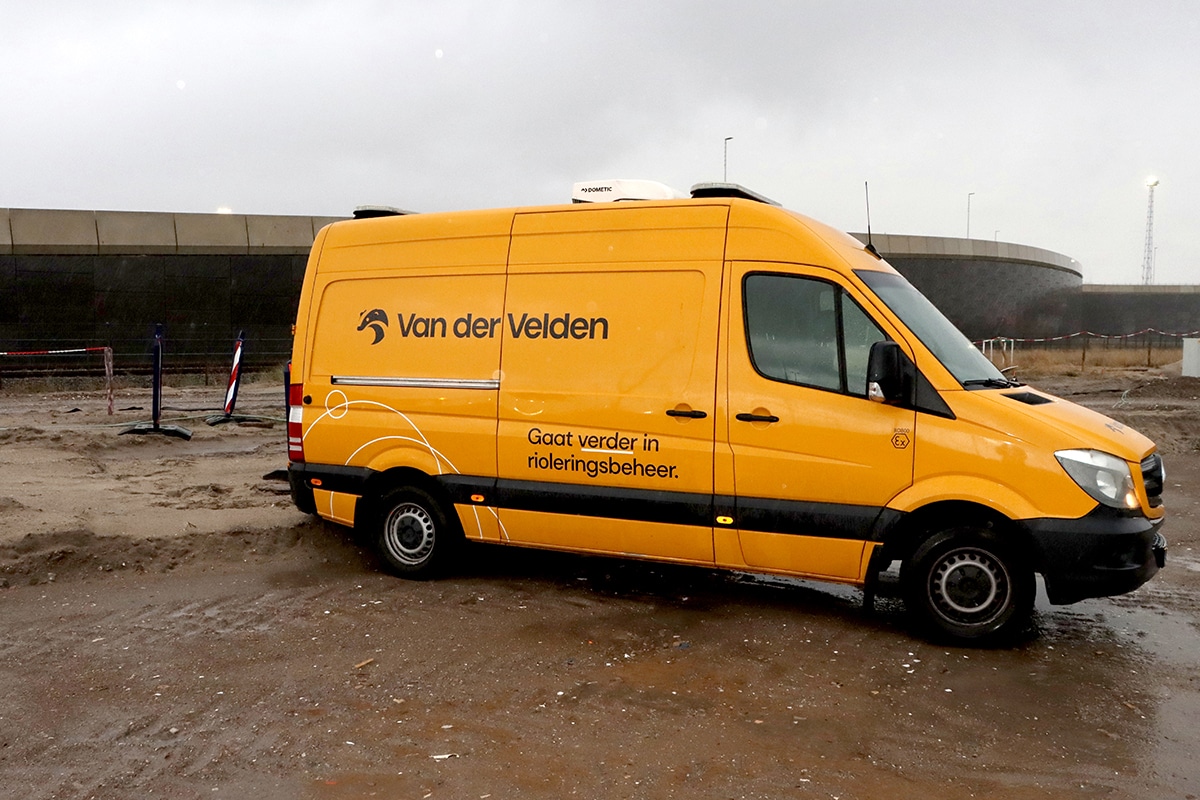
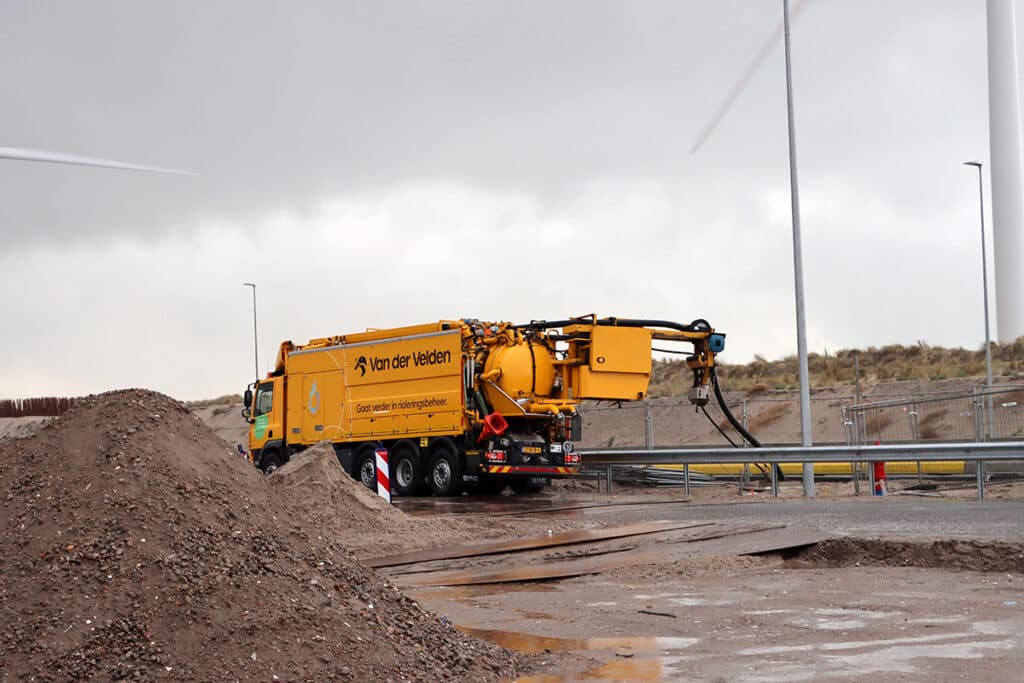
Although the system is constructed separately, several PVC and concrete sections converge and drain water into wadis. “These wadis provide natural infiltration into the groundwater. This is not a problem here at the Maasvlakte, because the reclaimed sand in the area allows water to pass through quite easily.” The project area has several relatively short systems that drain into several wadis. “Each section is inspected separately to make sure that each part meets the set requirements,” Van Klei emphasizes, explaining, “On site, we coordinate with construction company BAM Infra Nederland on which part of the section is ready and can be inspected. With our suction-spray combination truck, we first thoroughly clean the pipes. This special recycling combination sucks up the water, filters out solids and makes the water immediately reusable. In this way, we do not waste clean water and we work sustainably and efficiently.”
After cleaning a particular route between two wells, Van der Velden drives the inspection truck above the well in question. “There, we insert a mobile camera into the pipeline: a moving robot with a movable head that we accurately operate from the truck. Well after well, we inspect each strand, assessing all state aspects in accordance with EN-NEN 13508/2. We measure pipe diameters, assess connections, check for leaks and record abnormalities such as subsidence or cat backs. All findings are recorded in video footage and processed in an extensive report. This not only benefits the Port of Rotterdam Authority, but also the municipality. With the help of specialized software, the municipality is able to incorporate the data from our report directly into their management drawings so that they are again accurate with all new connections and locations of connections.”
The construction of the Princess Alexia Viaduct and road infrastructure is still underway, and with it the stormwater drainage system and its phased inspection. “The biggest challenge to date is the accessibility of certain manholes, as some parts of the work site are difficult to walk on. Nevertheless, thanks to good cooperation with BAM, we always manage to find a solution,” says Van Klei. “Our strength lies in transparency and open communication. Clients are involved and are always welcome to join us during inspections. For example, the Port of Rotterdam Authority has already looked along.” Finally, Van Klei praises the cooperation on this project, with BAM as well as all the subcontractors. They all work together in a friendly manner, with respect for each other's expertise. An approach that contributes noticeably to the quality of the project.”
Neem dan rechtstreeks contact op met Van der Velden Rotterdam B.V..
 Contact opnemen
Van der Velden - Solutions for now and for later What began in 1965 as a small family business has grown into a strong all-round sewer management company with branches throughout the Netherlands. For sixty years we have been building on a solid foundation. That goes much further than just clearing blockages. We renovate, inspect, draw up maintenance plans and have [...]
Bekijk Bedrijfsprofiel