Platform on civil engineering, underground infrastructure, energy, construction equipment & construction machinery
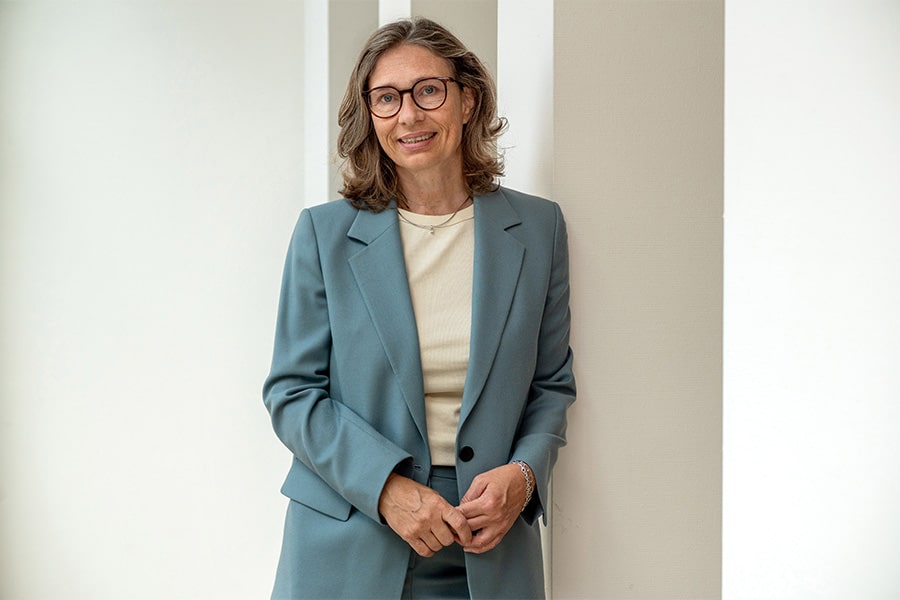
Dutch hydraulic engineering is in the midst of one of the biggest transitions in its history. Climate challenges, stricter emission standards, and social expectations are forcing the sector to think fundamentally differently. At the same time, hydraulic engineers have been working for decades with robust, expensive work vessels that cannot simply be replaced. Sustainability must take shape between these two worlds.
It is striking that the drive towards sustainability is increasingly coming from within. This is particularly evident in family businesses such as ours, where generations are involved and a long-term perspective is a matter of course. This creates an intrinsic motivation to invest in cleaner technologies. At the same time, the sector is also being strongly challenged by clients, with Rijkswaterstaat (the Dutch Ministry of Infrastructure and Water Management) leading the way. Contracts increasingly ask: what can already be done without emissions? This question is prompting the market to come up with concrete solutions, from hybrid concepts to completely emission-free ships.
Nevertheless, there are major challenges. Hydraulic engineering projects do not usually take place in one fixed location. Travel distances can be considerable, and maintenance areas are often spread over many tens of kilometers. This makes the energy chain—charging, buffering, transporting—at least as important as the ship's propulsion system itself. A completely emission-free operation can sometimes be logistically complex and financially burdensome, but clear agreements and cooperation with clients can facilitate this. Practice shows that flexibility is essential: mobile charging solutions, energy containers, and systems that can function independently of fixed grid connections.
A second important nuance: sustainability is not about ‘radically changing everything at once’. In hydraulic engineering, ships have a lifespan of more than thirty years or longer. That is why we think in terms of transition paths together with our clients. Stage V engines in combination with HVO100, for example, can already reduce a large part of emissions. Zero emissions remains the goal, but the last few percent of CO2 savings are often the most expensive and complex. I believe that the maximum impact per euro should be the guiding principle, rather than just quickly setting a dot on the horizon.
Consistent policy, including at European level, is crucial in this regard. Sustainability investments are substantial and must be recouped over many years. Anyone building a ship that will last thirty years must be able to rely on a level playing field and stable and appropriate rules, otherwise there is no business case. This applies not only to us, but to the entire market. At the same time, hydraulic engineering is an international market. Ships operating in the Netherlands today may be elsewhere in Europe or even beyond tomorrow. Sustainability must be stimulated nationally and be internationally sustainable.
Knowledge sharing is important, and this is widely supported throughout the sector. Through the Association of Hydraulic Engineers, the sustainability core group, and initiatives such as innovation hubs, experiences are shared about what works and what does not, from MKI criteria to energy concepts. We strive to ensure that companies do not have to reinvent the wheel individually. Because the greatest impact is achieved together. The future of hydraulic engineering is sustainable, that is beyond dispute. Not because it has to be, but because the sector knows that looking ahead has always been and will always be part of the profession.
Our advice to the government? Challenge the market, but ensure a realistic pace, an international level playing field, and consistent policy. The last few percent of CO2 savings are the most expensive, but with smart intermediate steps, we can already make huge gains. Because sustainability is not a project with an end date. In any case, we will continue. Learning, testing, scaling up. Our new ship, the Prins ZEs, is a concrete example of this. It is the first completely emission-free wire crane ship in the Netherlands.
The Pen - Isolde Struijk – Director Van den Herik