Platform on civil engineering, underground infrastructure, energy, construction equipment & construction machinery
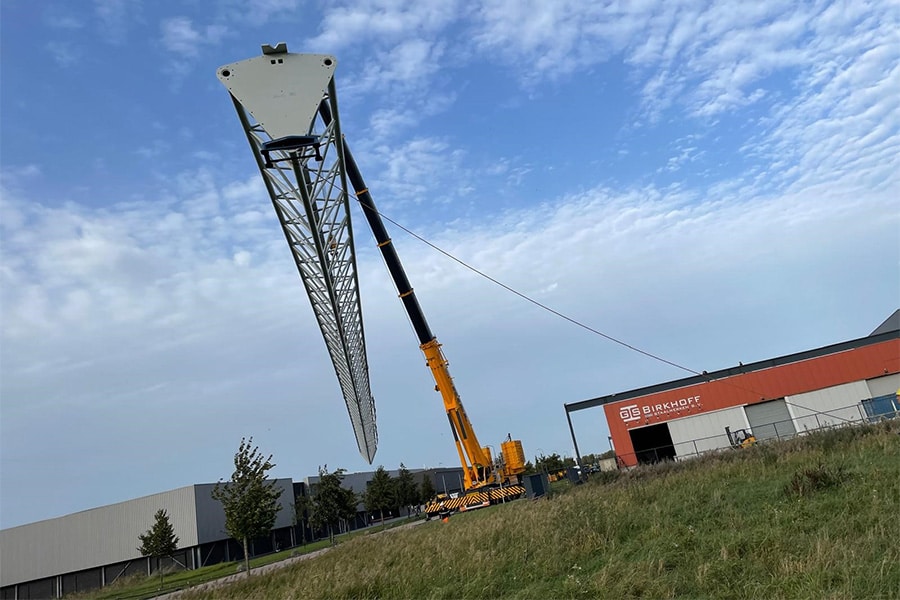
In the Netherlands, thousands of motorists are safely guided through the road network every day thanks to portals: the steel structures to which traffic signs and signals are attached. As part of the renovation of the A10 South, GS Birkhoff Staalwerken is installing a total of 25 gantries, most of which consist of renovated poles, known as reno gantries. This marks an important step in making the infrastructure more sustainable, with a focus on reuse without compromising safety and quality.
Of the 25 portals that GS Birkhoff Staalwerken is installing for TriAX at Zuidasdok, only ten are completely new. “We are filling in the rest with our reusable portals,” says Henk van den Ochtend, director of GS Birkhoff Staalwerken. “These are existing portals that were previously used along the road, but have been refurbished for reuse. Rijkswaterstaat encourages this reuse and has drawn up a new set of requirements for this purpose. These requirements describe how portals can be reused in a safe and responsible manner, even outside the original projects from which they originate. Previously, reuse was only allowed within the same project, but now it is possible to use portals across projects.”
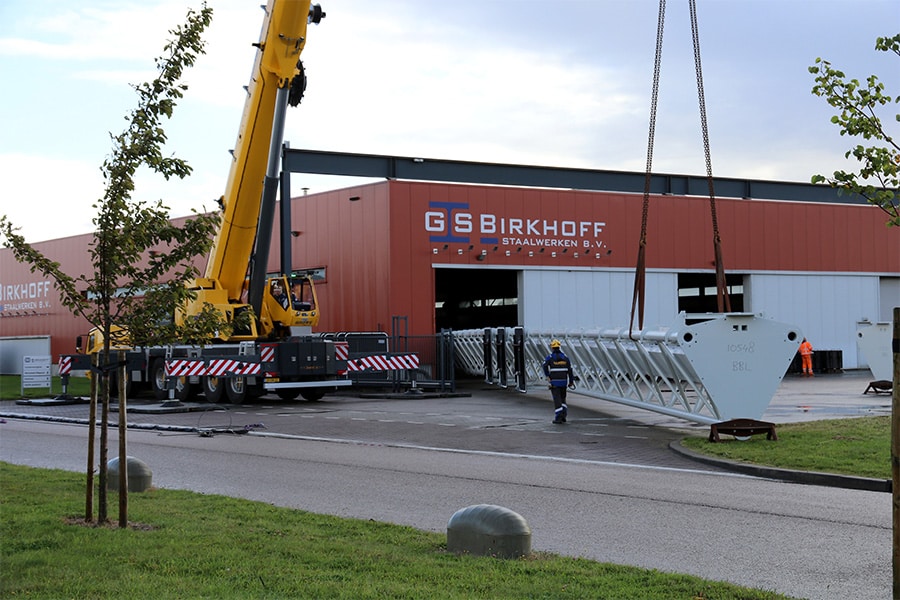
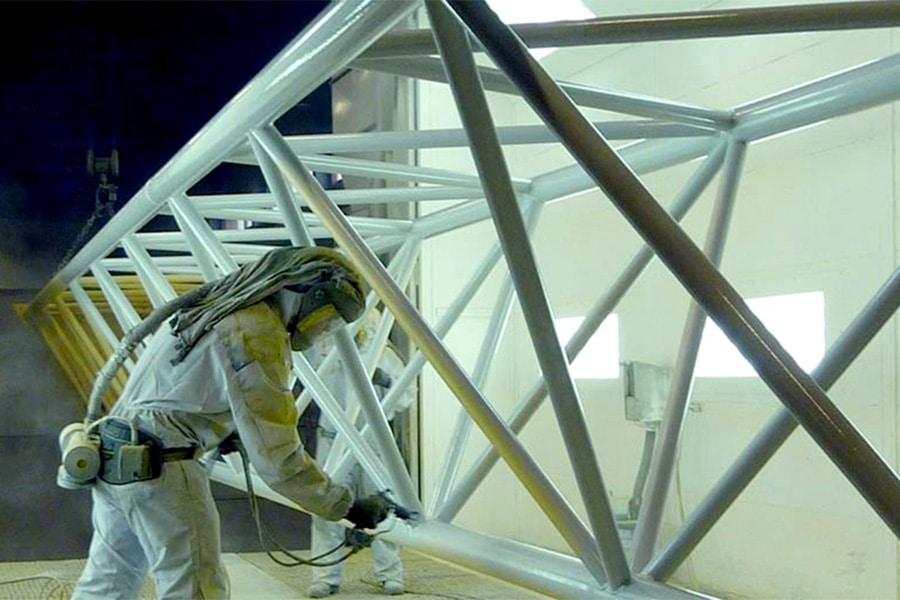
Opting for renovation drastically reduces the purchase of new raw materials, which saves costs and contributes to sustainability goals. But reusing portals is not a straightforward process. “Each portal is thoroughly inspected in accordance with the VDC 2005 standard,” explains Van den Ochtend. “This involves checking the technical condition. Photos are taken, welds are inspected, and, if necessary, parts are shortened or lengthened. Each renovated portal is then given a new protective coating, and all information is recorded in a comprehensive inspection report.”
What is unique is that each bridge portal is delivered with a kind of birth certificate: a document containing the complete history of the portal, including the original construction number, the modifications made, and the materials used. “This information is shared with Rijkswaterstaat, so that it is always clear where a portal comes from, what modifications it has undergone, and where it has been reinstalled. This prevents uncontrolled growth or uncertainty and ensures that safety remains fully guaranteed,” says Van den Ochtend.
Installing portals is always a challenging task, but according to Van den Ochtend, this project presents an additional difficulty. “Space is very limited at the De Nieuwe Meer junction, with sometimes only one and a half meters between the buildings and our portals. In addition, large cranes have to maneuver in a limited space, and it is essential to carry out the work within tight time frames of four to five hours. This requires not only technical expertise, but also extremely careful planning and cooperation between all parties involved.”
GS Birkhoff Staalwerken has now successfully installed the first two rail portals. “The use of rail portals proves that reuse in the infrastructure sector is not only feasible, but also offers major advantages in terms of sustainability, safety, and efficiency. It is a development that fits in with the ambition to make our infrastructure future-proof, with respect for both people and the environment. And as a portal builder, we are happy to contribute to this,” concludes Van den Ochtend.
Neem dan rechtstreeks contact op met Birkhoff Steel Works, B.V.
 Contact opnemen
GS Birkhoff Staalwerken B.V. was founded as Birkhoff Staalbouw in Pernis in 1920. Over the years, Birkhoff has developed into an internationally operating company in which engineering, production and services have reached a high level. GS Birkhoff Staalwerken B.V. has built a renowned name in the field of traffic gantries, steel structures and assembly work [...].
Bekijk Bedrijfsprofiel